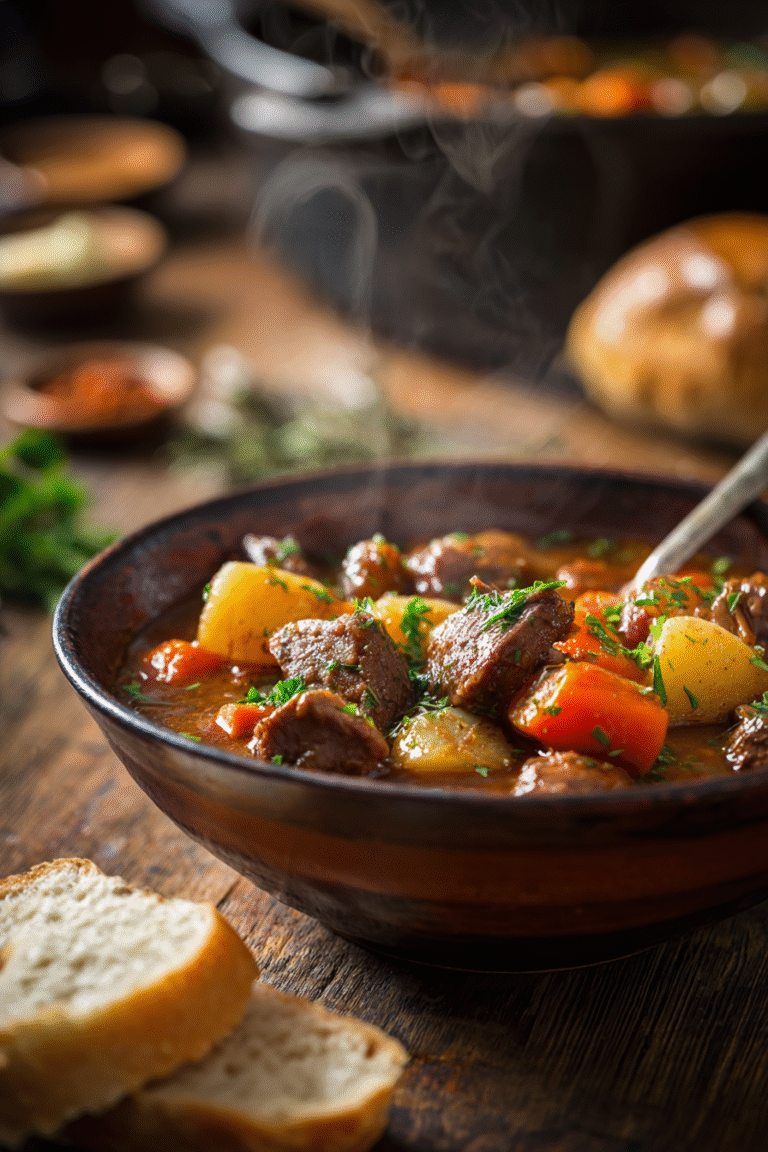
The Ultimate Beef Barley Soup: A Master Class in Comfort
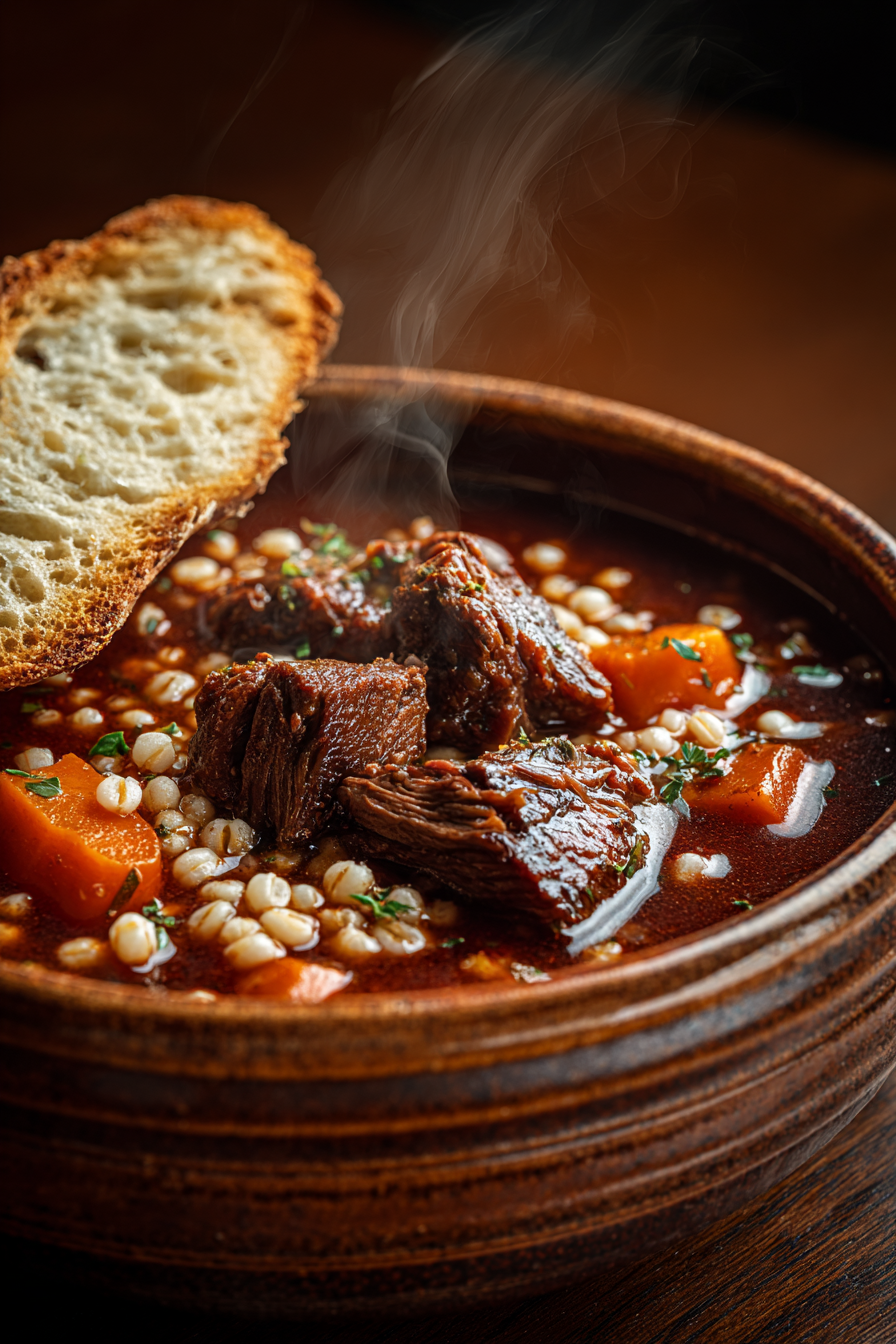
There is a massive difference between a soup that tastes like “hot water with vegetables” and a rich, gelatinous pottage that sticks to your ribs. That difference isn’t magic—it’s chemistry.
Beef Barley soup is an ancient standard, but many recipes get the texture wrong. The beef dries out, the barley turns to mush, or the broth lacks depth. This guide breaks down exactly how to build flavor layers and manage texture so you get tender meat and distinct, chewy grains every time.
The Anatomy of the Perfect Soup
Before we get to the stove, we need to talk about your shopping list. The success of this dish relies entirely on three variables: the cut of beef, the type of barley, and the “umami boosters.”
1. The Beef: Why You Should Ignore “Stew Meat”
Most people grab the pre-cut package labeled “stew meat” at the grocery store. Don’t do this. “Stew meat” is often a mix of scraps from different parts of the cow (round, sirloin, chuck), meaning they all cook at different rates. You’ll end up with some tender bites and some that taste like rubber bullets.
The Solution: Buy a Chuck Roast and cut it yourself.
The chuck comes from the shoulder, a hard-working muscle loaded with collagen. Under slow, moist heat, this collagen melts into gelatin. This process not only keeps the meat moist but also gives your broth a silky, rich mouthfeel that lean cuts like sirloin or round just can’t produce.
2. The Grain: Pearl vs. Hulled Barley
You will find two main types of barley on the shelf. Your choice dictates your cooking time.
- Pearl Barley: The most common variety. It has been polished to remove the outer hull and the bran layer. It cooks faster (30–40 minutes) and releases more starch into the soup, creating a creamy, gravy-like consistency.
- Hulled Barley: Has the outer husk removed but keeps the bran. It is a whole grain with a distinct “pop” and chewiness. It takes longer to cook (50–60 minutes) and keeps the broth clearer.
- My Recommendation: Use Pearl Barley for that classic, thick comfort-soup texture.
3. The Secret Weapons (Umami)
Beef broth alone is rarely “beefy” enough. To get that deep, restaurant-quality savory flavor, we rely on natural glutamates:
- Tomato Paste: But not just dumped in. It must be caramelized (see the “Pincage” technique below).
- Soy Sauce & Worcestershire: A tablespoon of soy sauce adds salt and fermented complexity that highlights the meat without making the soup taste like Asian cuisine.
- Fish Sauce: A splash is the secret ingredient in many pro kitchens; it adds savory depth indistinguishable from the beef itself.
The Recipe: Old-Fashioned Beef Barley Soup
Prep time: 20 mins | Cook time: 1.5 – 2 hours | Serves: 6-8
Ingredients
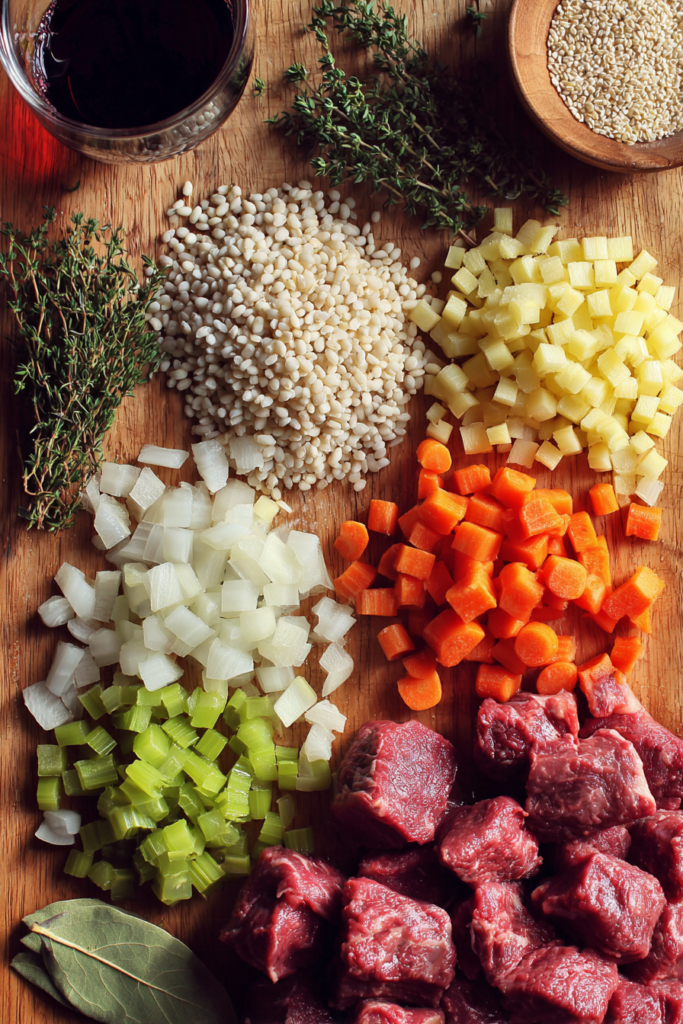
- The Meat: 2 lbs (1kg) Beef Chuck Roast, trimmed and cut into 3/4-inch cubes.
- The Sear: Salt, Black Pepper, and 2 tbsp Neutral Oil (Grapeseed or Canola).
- The Mirepoix: 1 large Yellow Onion (diced), 3 Carrots (sliced), 2 ribs Celery (sliced).
- The Flavor Base: 4 cloves Garlic (minced), 2 tbsp Tomato Paste.
- The Deglazer: 1/2 cup Dry Red Wine (Cabernet Sauvignon or Merlot).
- The Liquid: 6 cups Beef Broth (or high-quality Chicken Stock for better body) + 2 cups Water.
- The Grain: 3/4 cup Pearl Barley (uncooked).
- The Boosters: 1 tbsp Worcestershire Sauce, 1 tbsp Soy Sauce, 2 sprigs fresh Thyme, 1 Bay Leaf.
Instructions
1. The Maillard Sear (Do not skip)
Dry your beef cubes thoroughly with paper towels. Wet meat steams; dry meat sears. Generously season with salt and pepper. Heat oil in a heavy Dutch oven over medium-high heat. Sear the beef in batches. If you crowd the pan, the temperature drops and the meat boils in its own juice. You want a dark brown crust—this is the foundation of your flavor. Remove meat and set aside.
2. Sauté and Pincage
Lower heat to medium. Add the onions, carrots, and celery. Sauté for 5-6 minutes until softened. Add the garlic and cook for 1 minute.
- Expert Move: Push the veggies to the side and add the tomato paste to the hot surface of the pot. Fry the paste for 2-3 minutes until it turns a dark, rusty red. This caramelization removes the metallic acidity and deepens the flavor.
3. Deglaze and Scrape
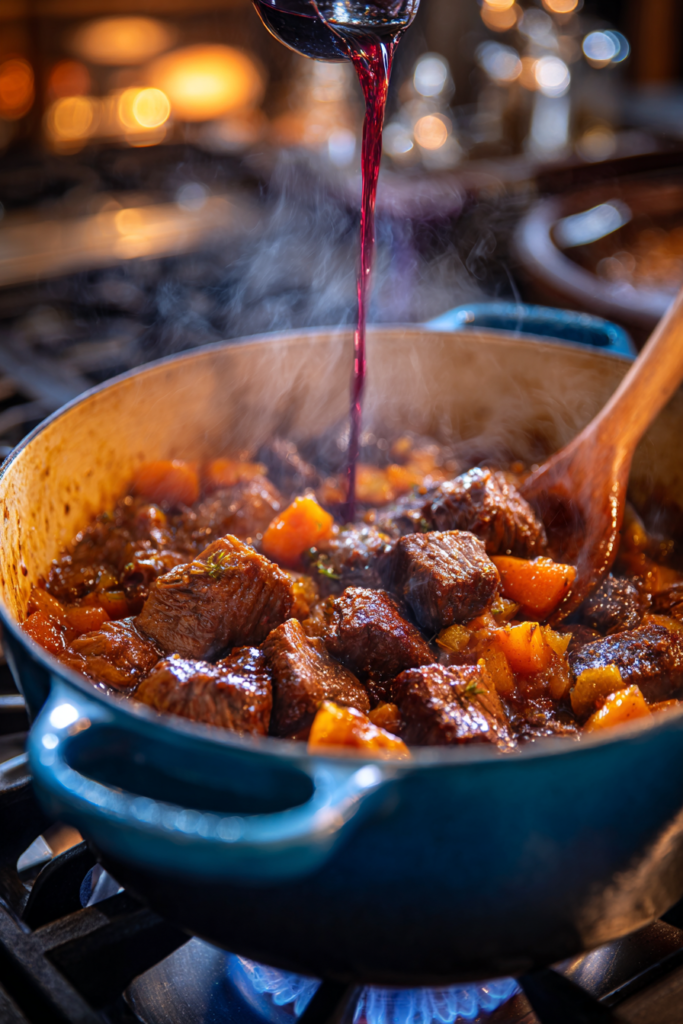
Pour in the red wine. Use a wooden spoon to scrape up the “fond” (the brown bits stuck to the bottom from the beef). This is pure concentrated flavor. Let the wine reduce by half to cook off the raw alcohol taste.
4. The Simmer
Return the beef (and any juices on the plate) to the pot. Add the broth, water, soy sauce, Worcestershire, thyme, and bay leaf. Bring to a boil, then reduce heat to a low simmer. Cover and cook for about 45-50 minutes. The beef should be starting to get tender but not falling apart yet.
5. The Barley Drop
Stir in the pearl barley. Cover and simmer for another 35-45 minutes.
- Texture Check: The soup is done when the barley is soft and the beef yields easily to a fork. If the soup is too thick, splash in a little more water. Remove the bay leaf and thyme stems before serving.
Common Questions & Troubleshooting
I researched the most frequent questions people ask about this recipe so you don’t have to guess.
“Can I make this in a Slow Cooker or Instant Pot?”
Yes, but you have to adjust the liquid and timing.
- Slow Cooker: You must sear the meat on the stove first for flavor. Transfer everything to the slow cooker but reduce the liquid by about 1 cup (since there is no evaporation). Cook on LOW for 7-8 hours. Warning: Pearl barley can get mushy if cooked for 8 hours. Consider adding it halfway through, or using the tougher Hulled Barley.
- Instant Pot: Sear on “Sauté” mode. Add all ingredients (use slightly less liquid). Cook on High Pressure for 20-25 minutes, then Natural Release for 10 minutes. If you are worried about mushy veggies, cook the meat/barley first, then add carrots/celery for a final 5-minute simmer.
“How do I freeze it without the barley turning to mush?”
This is the “Barley Sponge” problem. As the soup sits, barley continues to absorb liquid, turning your soup into a solid stew.
- The Fix: If you plan to freeze a large batch, it is smarter to cook the barley separately in water and add it to your bowl just before serving. If you freeze it mixed, the barley will be very soft upon reheating. When reheating leftovers, you will almost certainly need to add a splash of water or stock to loosen it up.
“What is the best red wine to use?”
You want a dry red with moderate tannins to cut through the rich beef fat. Cabernet Sauvignon and Merlot are the top choices. Avoid sweet wines or delicate Pinot Noirs that might get lost in the heavy broth (though Pinot can work if that’s all you have). If you don’t drink alcohol, simply substitute with more beef broth and a teaspoon of red wine vinegar for acidity.
“Can I make this Gluten-Free?”
Yes. Barley contains gluten, so you need a substitute.
- Sorghum: This is the best textural match. It is round, chewy, and holds up to simmering just like barley.
- Short Grain Brown Rice: Works well but has a different mouthfeel.
- Quinoa: Not recommended—it cooks too fast and gets gritty in long stews.
“My soup tastes bland. What happened?”
If your soup tastes flat, it’s usually one of two things:
- Lack of Salt/Acid: Beef needs a lot of salt. If it tastes “dull,” add salt. If it tastes “heavy,” add a splash of vinegar or lemon juice at the very end to brighten it up.
- Skipped the Sear: If you boiled the meat instead of searing it, you missed out on the Maillard reaction foundation.
- Watery Broth: Did you use water instead of stock? Add a tablespoon of beef base (like “Better Than Bouillon”) or more soy sauce.